Bees are vital pollinators whose ecological services underpin global food production and ecosystem health. Their role in pollination sustains biodiversity, supports crop yields, and contributes to climate regulation. However, Role of Bees in Climate Change significant threats to bee populations and their habitats, with profound implications for global food security.
Bees and Food Security
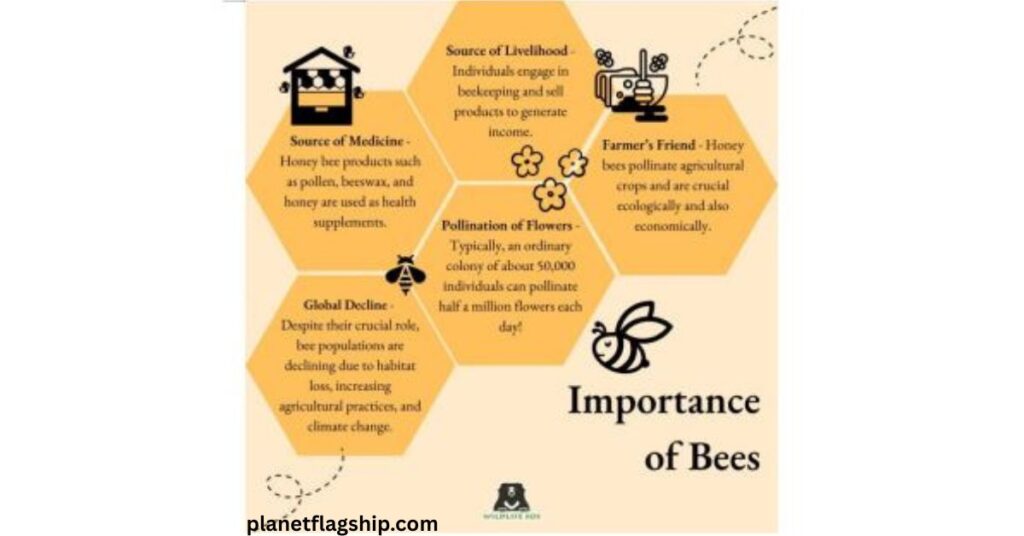
Bees pollinate approximately 70–87% of the world’s flowering plants and major food crops, including fruits, vegetables, nuts, and seeds. This pollination is essential for the production, quality, and diversity of food, directly impacting human nutrition and agricultural economies. The economic value of bee pollination is estimated at over $117 billion annually, affecting around 35% of crops and 84% of cultivated plants globally. Beyond crop pollination, bees also provide ecosystem services, such as maintaining plant diversity and soil health, which further support sustainable agriculture and food systems.
Declines in bee populations, driven by environmental pressures, threaten these services. Without adequate pollination, crop yields and quality diminish, leading to reduced food availability and nutritional deficits. This jeopardizes food security, particularly in vulnerable regions where agriculture depends heavily on insect pollinators.
READ MORE: Climate Refugees Explained: The Hidden Human Cost of Climate Change
Impact of Climate Change on Bees
Climate change is recognized as a principal driver of pollinator decline, exacerbating threats from habitat loss, pesticide exposure, and diseases. Rising temperatures, altered precipitation patterns, and extreme weather events disrupt bee foraging behavior, reproduction, and survival. These changes also cause temporal and spatial mismatches between bees and the flowering plants they pollinate, undermining plant-pollinator synchrony, which is critical for ecosystem stability.
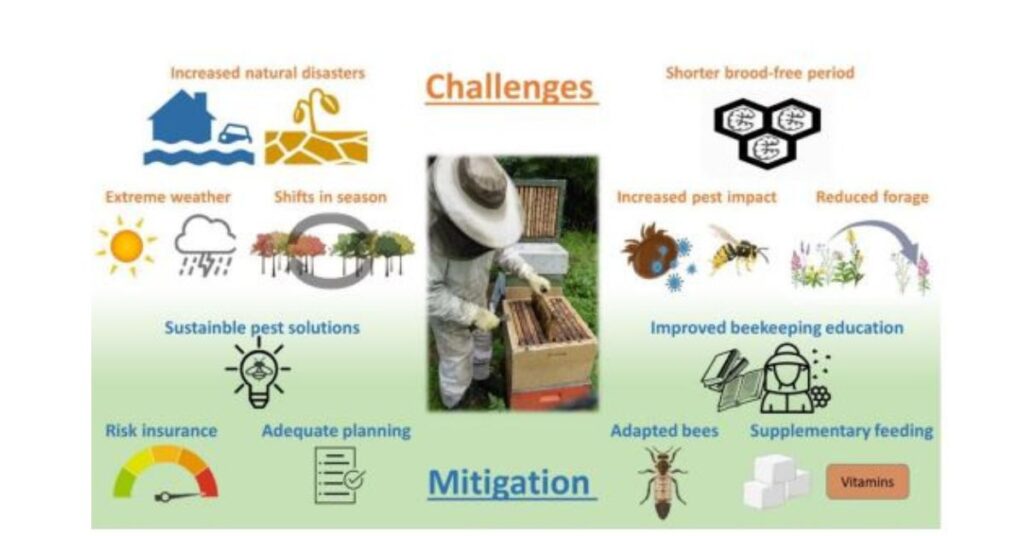
A global study analyzing 1365 bee species projected that about 65% will experience reductions in their suitable climate ranges by 2070 under high-emission scenarios. The most severe impacts are expected in Africa and Europe, with Europe facing average range contractions of up to 56%.
Conversely, North America may see some species expand their ranges, but overall, climate change threatens to disrupt existing pollination networks worldwide.
Physiological studies indicate bees have a limited capacity to increase heat tolerance, relying instead on behavioral adaptations such as seeking thermal refuges in native vegetation.
Conservation of such habitats is therefore critical to buffer bees from climate extremes and sustain their populations.
Bees, Ecosystem Services, and Climate Regulation
By enabling plant reproduction, bees support ecosystems that sequester carbon and stabilize soils, indirectly contributing to climate mitigation. Healthy plant communities maintained by pollination capture atmospheric carbon and reduce erosion, helping to regulate the climate. Declines in bee populations risk weakening these ecosystem functions, creating feedback loops that exacerbate environmental degradation and climate change.
Conservation and Sustainable Management
Addressing threats to bees requires integrated conservation strategies that include habitat protection, reduced pesticide use, and the promotion of pollinator diversity. Sustainable agricultural practices and pollinator-friendly land management can enhance resilience against climate impacts. Monitoring bee populations and understanding species-specific vulnerabilities enable targeted conservation interventions.
FAQs: The Role of Bees in Climate Change and Food Security
Why are bees important for food security?
Bees pollinate most flowering plants and many major food crops like fruits, vegetables, and nuts. Their pollination improves crop yield, quality, and diversity, making them essential for global food supply and human nutrition.
How does climate change affect bee populations?
Climate change alters temperatures, rainfall, and flowering seasons. This disrupts bees’ foraging, reproduction, and survival, and creates mismatches between bees and the plants they pollinate, reducing pollination efficiency.
Can ecosystems survive without bees?
Without bees, many plants would struggle to reproduce. This would reduce biodiversity, weaken ecosystems, and lower agricultural productivity, ultimately threatening food security and environmental stability.
Do bees help in climate regulation?
Yes. By supporting plant growth and biodiversity, bees indirectly help ecosystems capture carbon, protect soil, and regulate local climates, contributing to climate change mitigation.
What can be done to protect bees?
Protecting natural habitats, reducing pesticide use, adopting pollinator-friendly farming, and taking climate action are key steps to conserve bee populations and secure future food systems.
ALSO READ: How Climate Change Is Driving Animal Migration Patterns?
Conclusion
Bees are indispensable to global food security and climate regulation through their pollination services. Climate change significantly threatens bee distributions and populations, risking disruptions to food production and ecosystem health. Protecting bees through conservation, sustainable agriculture, and climate action is essential to safeguard food systems and maintain ecological balance in a warming world.
References
Global Trends in Climate Suitability of Bees: Ups and Downs in a Warming World, PMC, 2024.
The Role of Bees in Pollination and Food Security: A Critical Review, UJEcology.
Anthropocene Crisis: Climate Change, Pollinators, and Food Security, MDPI, 2023.
Extreme Events Induced by Climate Change Alter Nectar Offer and Pollinator Behavior, Nature, 2025.
Global Trends in Climate Suitability of Bees: Ups and Downs in a Warming World, PubMed, 2024.
Climate Change’s Impact on Honeybee Distribution and Population, Habitats, Bioproducts, and Pest Threats as Protective of SDGs, Journal of Environmental & Earth Sciences, 2025.
Climate Change Poses Grave Threat to Pollinators, Imperiling Biodiversity and Food Security, CABI Reviews, 2024.
Bolstering Bees in a Changing Climate, USDA Tellus, 2024

John is a professional blogger and passionate advocate for environmental sustainability. With years of experience exploring eco-friendly practices and green innovations, he shares insightful articles on Planet Flagship to inspire a sustainable future. John’s expertise lies in making complex environmental topics accessible and actionable, empowering readers to make meaningful changes for the planet.