Introduction
Climate change is one of the most serious global problem of the 21st century rising temperature sea level rise extreme weather event and loss of biodiversity are some of its visible affects in the fight againts this crisis nature based solutions is getting more attention because they can be cost effective and help with climate resilience among these mangrove forest play important but often forgot role found in tropical and subtropical coastal region mangroves is unique ecosystem that act like natural barrier between sea and land they are not just important for coastal safety and biodiversity. However, they are also really good at trapping and storing carbon dioxide from the air, which is important for fighting climate change.
This article discusses the significant role mangroves play in the fight against climate change, including how they trap carbon, protect coasts, support wildlife, and sustain coastal communities. By understanding how important they are and the dangers they face, we can make better plans to protect them and use them as our partners in the global climate effort.
What are Mangroves?
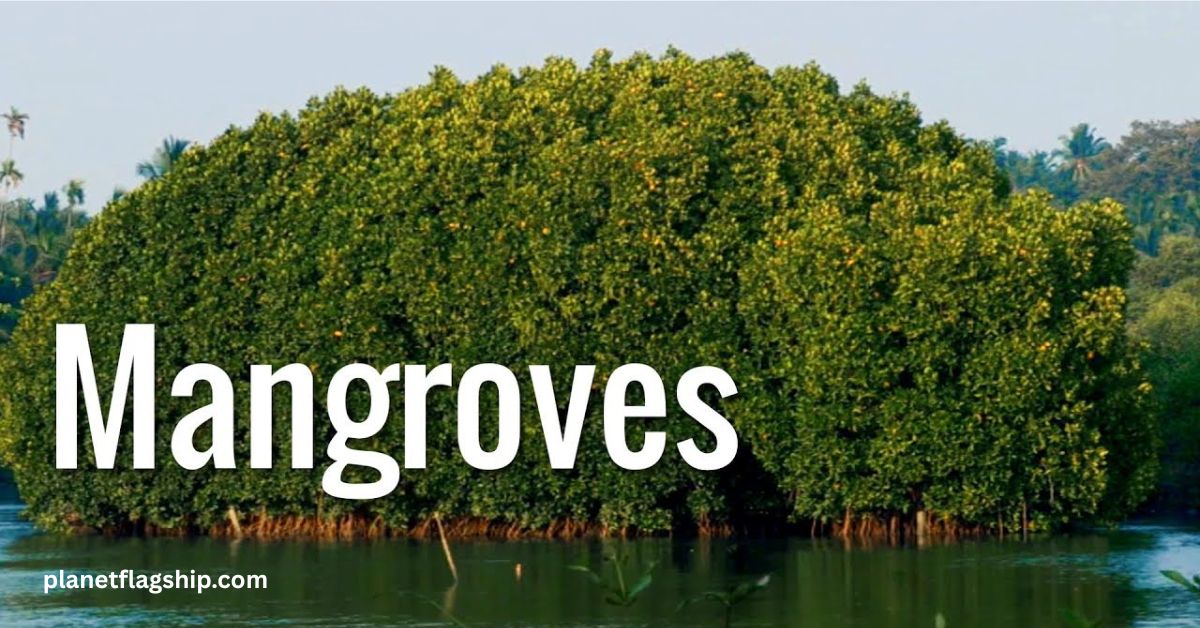
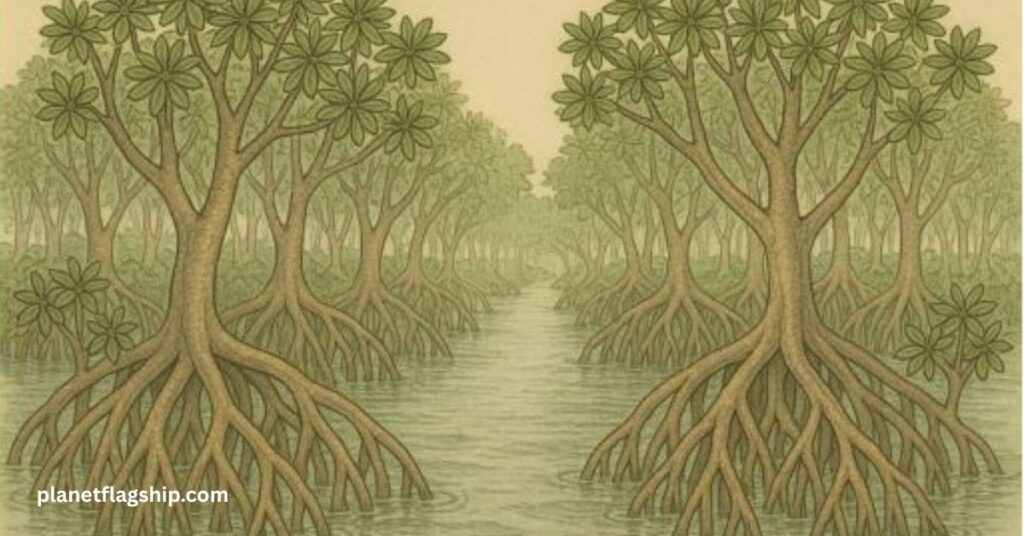
Mangroves are trees and shrubs that can tolerate saltwater and live in wet, muddy coastal areas in tropical regions. They live in tough places like salty water, changing tides, and low oxygen in the dirt. Their roots are thick and twisted, helping keep the coast steady and providing homes for many animals and plants, both on land and in water.
There are more than 80 types of mangroves worldwide. They mostly grow in countries such as Indonesia, Brazil, Australia, Nigeria, and Bangladesh. They help the environment by holding nutrients, preventing soil from washing away, supporting fisheries, and keeping coastal buildings safe.
READ MORE: How Climate Change Is Driving Animal Migration Patterns?
Mangroves and carbon storage
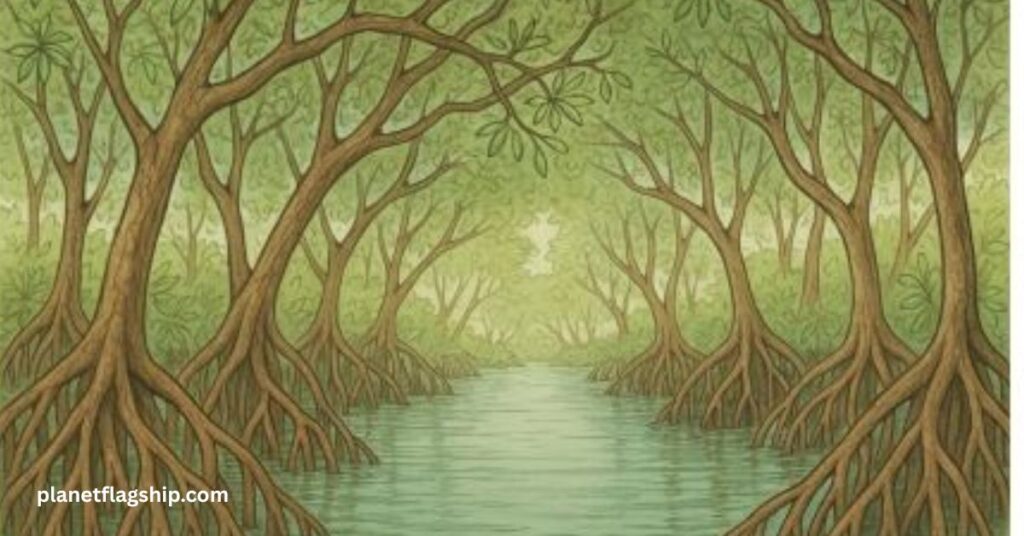
One of the most important roles of mangroves is capturing and storing carbon dioxide from the air. This is called carbon sequestration. Unlike land forests, mangroves store carbon not just in the trees but also deep in their soil, which is rich in organic matter.
Mangroves are part of blue carbon ecosystems, along with salt marshes and seagrass. These kinds of places are really good at holding carbon, and mangroves can store four times more carbon per hectare than rainforests.
Carbon in mangrove soil can stay there for a long time, even hundreds or thousands of years, if no one touches it, which makes mangroves very strong carbon sinks.
When we restore and regrow mangrove forests, we can help reduce atmospheric carbon and slow global warming.
Coast Protection and Disaster Safety
Because of climate change, bad weather like cyclones, storm surges, and floods happens more often. Mangroves act like a natural wall that softens these events.
Mangrove roots and thick plants slow wave energy and reduce its height; they also stop storm surge and hold the coast steady by trapping sand and mud. This helps stop floods and manage water better during big rain.
Places like the Sundarbans in India and Bangladesh show how mangroves help protect people from severe storms and demonstrate their importance in disaster control.
Biodiversity and Ecosystem Help
Mangroves are full of life and support many animals and plants; they serve as homes and nurseries for many species.
Fish, crabs, shrimp, and other sea life live in mangroves. Many of the fish people eat need mangroves to grow up. Birds, reptiles, and mammals also live there, making the place rich in biodiversity.
Mangroves help with pollination and nutrient exchange with nearby ecosystems, and this keeps nature working well.
This all helps humans, too, and is part of how people near the coast survive.
Another new idea is that mangroves can move with sea rise. This is called landward migration. Mangroves grow farther inland when space is available and continue storing carbon. Some scientists are trying to help this with mangrove-assisted migration, planting them in new areas.
One new hypothesis is that mangroves help cool the surrounding air by increasing air moisture and increasing rainfall. Another idea is that mangroves may help prevent the ocean from becoming more acidic by sequestering carbon and preventing it from entering the ocean.
So, mangroves are not just trees; they are very effective at fighting climate change. With their ability to store carbon, protection against storms, and newly discovered roles, they are a natural solution to a major global problem. More research keeps showing their benefits, so we must save and grow more mangroves before it’s too late.
People and Community Life
Many people living near the coast depend on mangroves for food, income, and jobs.
Fishing and growing fish in the mangrove area give food and jobs. Eco-tourism also helps teach about the environment and helps people who collect honey, medicinal plants, and mangrove wood make money.
So helping mangroves is not just for nature; it helps people live better and get out of poverty.
Danger to Mangroves
Even when they are so useful, mangroves are in danger.
Cutting trees, building stuff, farming, and pollution like plastic or oil hurt mangroves. Climate change also makes it worse because of rising sea temperatures and saltwater intrusion, and people clear mangroves for cities or farming.
It’s said we’ve already lost one-third of mangroves, not just lowering their carbon storage but also making coastal people more vulnerable.
Mangroves provide important ecosystem services like nutrient cycling, carbon storage, fish breeding grounds, and coastal protection. Due to their fast plant growth and waterlogged soils, they store large amounts of carbon for long periods.
Saving and Fixing Mangroves
People around the world are now trying to protect mangroves.
Big global projects like the Blue Carbon Initiative and the Mangrove Alliance are working to improve policies. Local people must be part of this so they can use their old knowledge and care for the land’s rights.
Governments also need to enact laws to protect mangroves, establish marine protected areas, and develop plans to care for the ecosystem. Fixing broken mangrove areas by planting new trees also works, and many countries are already doing so, like the Philippines, India, and Kenya.
Mangrove forest in Indonesia
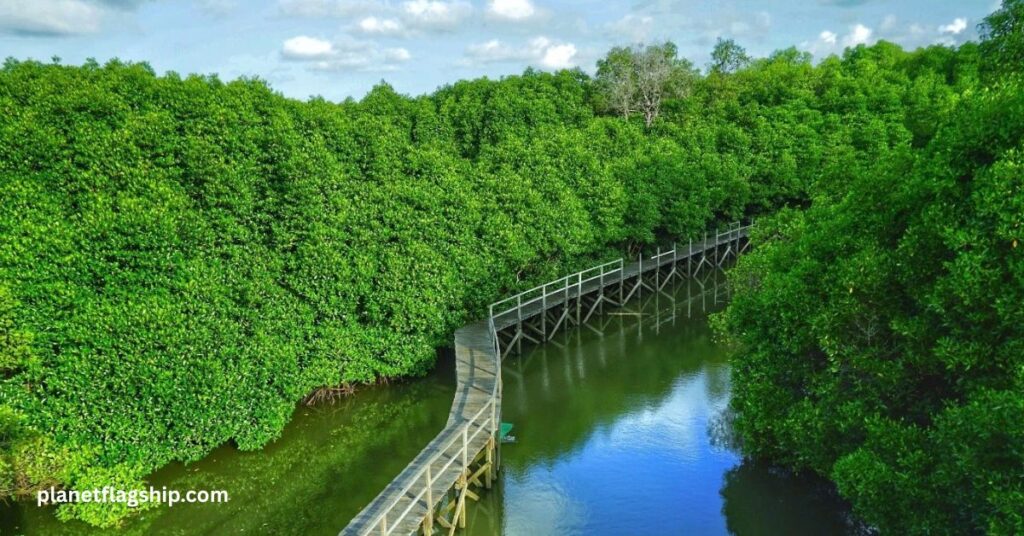
Mangroves store around 3.14 Pg of carbon, but the country has lost 40 percent of its mangroves over the last 30 years, mainly due to aquaculture development. This loss is contributing significantly to greenhouse gas emissions, with annual emissions ranging from 0.07 to 0.21 Pg CO2e.
Globally, mangrove deforestation accounts for 10 percent of all emissions from tropical forest loss, even though mangroves cover only 0.7 percent of tropical forests. Converting mangroves to shrimp ponds results in substantial carbon losses, especially from belowground carbon.
Between 1980 and 2005, Indonesia lost 30 percent of its mangroves, from 4.2 Mha to 2.9 Mha, with an annual deforestation rate of 1.24 percent. Shrimp exports totaled around 1.5 billion dollars in 2013, so aquaculture became a major driver of mangrove loss.
Indonesia did not include mangroves in its UN climate reports before because there were no clear guidelines, but now, with the country’s greenhouse gas reduction targets of 26 to 41 percent, saving mangroves can help the country meet those targets, so conservation must be a focus. Indonesia was cutting about 52,000 hectares of mangroves every year from 1980 to 2005. Even though mangroves cover less than 2 percent of the forest area, they accounted for 6 percent of the total forest loss in the country.
Indonesian mangroves store a large amount of carbon, around 3.14 petagrams. If mangrove land is converted, as in shrimp farms, it can release between 0.07 and 0.21 petagrams of carbon dioxide every year. This accounts for 10 to 31 percent of total land-use emissions in Indonesia.
Having data on carbon in mangroves helps better plan climate change actions, restore damaged mangroves, and improve fish farming.
Indonesia alone accounted for about 42% of global carbon emissions from damaged coastal ecosystems like mangroves, marshes, and seagrasses. These coastal ecosystems release 0.15 to 1.02 petagrams of carbon dioxide every year.
Worldwide, this loss leads to economic damage of around six to forty-two billion dollars every year, but if managed properly, stopping carbon emissions could cost less than ten dollars per ton of carbon dioxide. This means Indonesia could save money and help people by protecting mangroves.
If the costs of such projects are clear, the benefits of stopping mangrove loss are evident. Climate actions to reduce carbon emissions can also protect coastal areas from sea level rise and help local people sustain their livelihoods through fishing.
Shrimp farming in Indonesia earns about 1.5 billion dollars every year and has grown significantly from 1997 to 2005, covering about 650,000 hectares.
To understand this globally, researchers also examined carbon data and mangrove loss in nine other countries.
Mangrove forest in Pakistan
Mangrove forests are a special type of coastal forest found in tropical and subtropical regions. In Pakistan, mangroves grow mainly along the coastlines of Sindh and Balochistan, especially in the Indus delta region near Karachi and Thatta. These forests are very important for the environment. They protect coastlines from erosion, reduce storm damage, support marine life, and serve as nurseries for many fish and shrimp. Mangroves also help fight climate change by storing large amounts of carbon dioxide.
Even they are important mangrove forest in pakistan is in very vulnerable condition From last few decades these forest has been decrease very fast because of natural and human made reason One big threat is the reduce in freshwater flow from indus river As dams and barrages was built on upstream less water reach in delta that make area more salty Mangroves need both fresh and salty water to live and more salt kill them Pollution also big problem Industrial waste oil spill untreated dirty water and plastic go into coastal water and damage the roots and health of mangrove Urban growth near karachi cause cut of mangrove trees to make buildings ports and other big projects Illegal cutting for fuel and wood is also problem.
Climate change makes things worse. Rise in sea levels and higher temperatures affect mangrove growth. Changing weather and more storms make the forest more vulnerable.
According to reports, Pakistan had one of the biggest mangrove forests in the region during the 1950s. But the mangrove area has been reduced significantly. Sometimes efforts have been made to protect and replant mangroves by the Sindh forest department and some international organizations, but the damage is still more than the saving. To protect these ecosystems, strong action is needed. First, water flow in the Indus delta must be regulated.
Second, strong laws are needed to stop cutting and polluting the area. People must also understand the value of mangroves, and they should be included in conservation projects and given alternative income sources so they don’t cut trees. Mangroves are not just trees; they are life for animals and people who live near the sea. Losing them means losing nature’s wall against storms, a home for wildlife, and a weapon against the climate issue. It is our duty to protect and restore mangroves before it’s too late.
ALSO READ: The Future of Climate Action: Can AI and Machine Learning Save the Planet?
Why are mangroves important for climate change mitigation?
Mangroves help fight climate change by absorbing and storing large amounts of carbon dioxide in their biomass and deep soils. They can store up to four times more carbon per hectare than tropical rainforests, making them powerful natural carbon sinks.
How do mangroves protect coastal areas from disasters?
Mangroves act as natural barriers that reduce wave energy, storm surges, and coastal erosion. Their dense root systems stabilize shorelines and help protect coastal communities from cyclones, floods, and rising sea levels.
What threats are causing mangrove loss worldwide?
Mangroves are threatened by deforestation, aquaculture expansion, urban development, pollution, and climate change. Human activities like shrimp farming and reduced freshwater flow have caused nearly one-third of global mangrove loss.
Why are mangroves important for local communities?
Mangroves support livelihoods by providing fish breeding grounds, food, timber, and opportunities for eco-tourism. They also improve food security and help reduce poverty in coastal communities.
What can be done to protect and restore mangroves?
Protecting mangroves requires strong environmental laws, habitat restoration, sustainable coastal development, and community involvement. Including mangroves in national climate strategies can significantly reduce carbon emissions and protect ecosystems.
Conclusion
Mangroves are a powerful weapon against climate change; they absorb large amounts of carbon, help protect coasts from storms, and support many animals and people. This makes them very, very important.
But if we keep losing mangroves, we will lose all these good things too, so we have to save and bring back mangroves. Governments, people, and scientists must work together to do this by putting mangroves in climate plans and sharing help between countries; we can use them better.
At the end, mangroves are not just trees by the sea; they are life-savers for the earth, and knowing how they help, we must save them if we want to beat climate change and leave a good world for the future.
References
https://www.mangrovealliance.org

John is a professional blogger and passionate advocate for environmental sustainability. With years of experience exploring eco-friendly practices and green innovations, he shares insightful articles on Planet Flagship to inspire a sustainable future. John’s expertise lies in making complex environmental topics accessible and actionable, empowering readers to make meaningful changes for the planet.